The DeMcConkie-izing of the Church

Elder McConkie, I think, made large contributions to the Church. He systematized and provided the only real encyclopedic Gospel reference book in a time when computers filled rooms.  I think he provided some things the Church needed at a particular time. That time appears to have passed.

The following should be taken with a grain of salt. I have sources, but most of them are shadowy people I’ve met in dark parking garages.

Mormon Doctrine, written by a member of the 70 in 1957, has outlived its usefulness. High church leadership intended The Encyclopedia of Mormonism to replace it (which has unfortunately not come to pass), and Deseret Book will not republish it after the current printing sells out.

The introduction to the Book of Mormon, penned at least in part by Elder McConkie, has recently been modified. (See discussion and links here and here.)*

New Institute manuals are being written, and for at least one volume, the writers have been instructed not to use Elder McConkie (among others) as a source.

The man’s testimony still stands, but his intellectual contributions have been surpassed.

*Frankly, I don’t see this as a tempest in a teapot, and it changes very little. The intro as written (“primary” “principal ancestors”) still allows for the presence of peoples other than those in the Book of Mormon, something Elder McConkie believed. As changed, it still allows Book of Mormon genes and descent to Native Americans whether in North or South America. It’s not doctrinal revisionism, nor is it messing with any canonized text. I don’t see much of a difference, except that it diffuses absolutist misreadings.
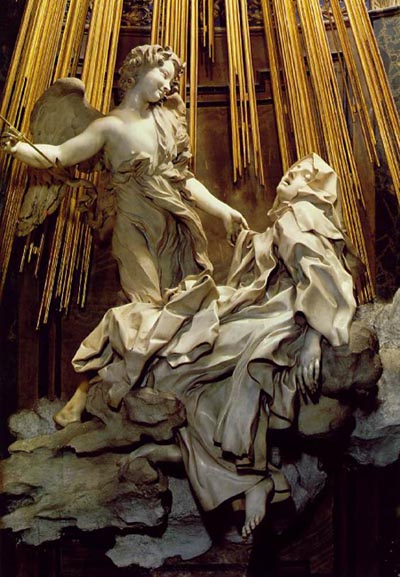
Holiness and Housework: The Sacred and the Mundane

One of the most influential theories for explaining religion over the last 50 years has been that religion is a system which divided people, places, and things into essentially two categories: the sacred and the profane. This view, popularized by Mircea Eliade, held that the sacred was a locus of holiness, where God could be encountered. Temples, churches, special times of the day for prayer, holy days, priests and priestesses, etc were examples of the sacred. The profane was everything else. Sometimes the profane was forbidden, but usually the profane was just the ordinary. This way of thinking about religion has come under some scrutiny for various reasons, but it is a useful way for thinking about Sister Beck’s controversial Conference talk.
Continue reading “Holiness and Housework: The Sacred and the Mundane”

The Excommunication of Father Feeney

In 1953, Pope Pius XII excommunicated Father Feeney for refusing to submit to ecclesiastical authority. The issue in question was Feeney’s rejection of the liberalization of Catholic Doctrine (a broad movement culminating in Vatican II). Specifically, Feeney was excommunicated for his insistence on the traditional, historical doctrine of the church, extra ecclesiam nulla salus (There is no salvation outside of the church). Feeney maintained that salvation was only for those who had been baptized, rejecting the idea that good people throughout history who may not have had the opportunity to know about the church could receive salvation. This conservative position earned him global fame and a direct confrontation with the Pope.
Continue reading “The Excommunication of Father Feeney”

The Informal “You” In European Missions

Everyone knows that missionary work in Europe is a massive failure. The church has need of substantial PR boost and an entirely new strategy for appealing to contemporary Europeans and their immigrant populations. I suspect that there are a number of problems that need to be addressed, not least among them is that the traditional method of proselytizing in Europe is seen as outmoded at best and an offensive version of American imperialism at worst. However, all of these problems are compounded by a long-standing policy for European missionaries to only use the “formal” form of “you” in all conversations, regardless of whether it is culturally or grammatically correct to do so.
Continue reading “The Informal “You” In European Missions”

Probing Interviews

There is a recent movement in a stake that I am aware of for Bishops and Branch Presidents to have more “probing interviews.” The goal is to ask more specific questions, especially about the Law of Chastity in order to uncover sins. These interviews are mostly the youth interviews, pre-mission interviews, and interviews with members who have already acknowledged worthiness issues. However, it has been suggested that Temple Recommend interviews also be more “probing,” encouraging members to define what they mean by the Law of Chastity, for example.
Continue reading “Probing Interviews”

The “Vote of Thanks”

I’ve been a Mormon all my life. Sadly, I mostly tune out during sacrament meeting, and I usually bring something to read because 99.9% of the time, I come away from sacrament meeting feeling less in tune with God than before. With a good book in hand, I can have some face time in the ward but simultaneously worship God my own way (currently reading Grant Palmer’s Insider’s View of Mormon Origins – IT’S EXTRAORDINARY!). Last week, I heard something I’ve heard all my life, and like a good intellectual, I questioned it. It was a “vote of thanks” for Brother Jones who had “served diligently” for two years in the Boy Scout troop.*

Just exactly what is a “vote of thanks?” Where did it come from? (Duh. The obvious answer is Utah. What I meant was When did it come from?). What if someone votes against it? If a vote of thanks is just some quirky motion we go through with no basis in anything, why can’t the leadership just ask members to go thank Brother Jones individually? I suspect the latter might even generate more feeling of true gratitude than a robotic motion of raising the hand in order to thank Brother Jones.

* I have issues with the mixing of Church and Scouts because the BSA is not affiliated with a religion of any kind. I have blogged on this before at FPR.

Women’s Religious Authority


I am currently reading a fascinating book on medieval mysticism that argues that the rise of female mysticism is not the result of some innate feminine spirituality, but the result of cultural constraints on women’s authority that required extraordinary spiritual experience as legitimating a female voice. I am curious if a similar dynamic exists within Mormon culture. Is women’s authority limited in LDS culture in such a way that particular forms of spirituality are required to authorize their speech? If so, what sorts of spiritual practices are authorizing? Or, is enough authority given that there is no need for extraordinary measures?

It is not uncommon for many LDS men to speak highly of the “innate” spirituality of women, especially their wives. Indeed, this innate spirituality is often seen as a substitute for, or even a parallel to, the male-only priesthood. Women are seen as more caring, more patient, more “in tune.” For the record, I am not convinced that these are natural gender differences. But, are they more than just stereotypes and cultural constructs? Could women actually perform these stereotypes in order to have a voice? Do these prescribed female characteristics actually produce women’s authority and agency in the church?

Finally, why are some female spiritual practices accepted and not others? Why hasn’t the church produced a need for women mystics? What is the difference for women in medieval Christianity and women in modern Mormonism that enables different means for authorizing women’s voices?

Mandatory Repentence Periods?

It appears that a new instruction manual to bishops requires certain “waiting periods” for prospective missionaries who commit certain sins, which are specifically enumerated. Is this a good thing or a bad thing?

The only reason that I can think that it is a good thing is that it standardizes the waiting period. This way, bishop A who is more strict than bishop B is required to follow the same guidelines.
However, this very process of standardization also strikes me as creating a whole new set of problems. First, it doesn’t distinguish between various degrees and types of sin. If a pre-missionary “pets” once with his girlfriend of three years, there is no difference in the waiting period from the pre-missionary who had sex numerous times with several partners.

Second, these waiting periods don’t deter sins. They aren’t public, so no one knows. But even when they become public, they are seen as standards which can be worked around. On a pre-missionary’s 18th birthday, he can have sex for the last time. These waiting periods seem to encourage teenagers to miss the message.

Third, this whole process of standarizing repentence periods strikes me as belonging to a Christian tradition of proscribed penitence, which I thought we Mormons didn’t beleive in. Say your “Hail Mary’s”, wait a year, and viola, you’re now forgiven. This seems to me to profoundly miss the point of the atonement. We don’t do this for others who sin in similar ways, why do we single out these pre-missionaries? This practice seems completely non-scriptural.

Fourth, from all accounts, many pre-missionaries simply choose to lie about their past transgressions because they don’t want to face the public shame. These policies turn private repentence into a public spectacle in such a way that can only encourage pre-missionaries to hide the truth and lose out on the benefits of a full repentence process.

Finally, these policies function to publically shame prospective missionaries in such a way as to actually discourage repentence and the desire to serve a mission. They make teenagers who have sinned feel unworthy and frustrated by a beaurocratic requirement that they feel is contrary to the principles of the gospel. Rather than have to admit that they have to “wait a year” and let family and friends express dissapointment, speculate about the nature of the sins, and constantly check-up on them, many prospective missionaries find that it is easier and more accepted if they simply say that they don’t want to go.

Perhaps I am missing something?

A Crisis in the Church

No, this post is not about low baptism numbers, low retention numbers, or low commandment observance. Rather, I see a major crisis of a different kind, a crisis of rhetoric.

Once upon a time, Mormons used to preach. The talks that were delivered had content and spunk. Sadly, I don’t think that I have been alive to ever have seen this past tradition, but it is long dead. Now, talks consist mostly of quotes from general authroities and banal observations about whatever the topic happens to be. I think that some of the responsibility for this comes from the models of the general authorities, very few of whom know how to really preach. I am sure that these well-rehearsed talks that are given in front of millions of people somehow get transformed into dull, monotone speeches upon delivery, so I don’t fault them. You have to work hard to listen to them. They rarely captivate. Like the GA’s, no one who speaks in church wants to stand out, so we just get a whole lot of mediocrity. It’s not that we don’t know how to give talks, it is just that we don’t know how to give sermons, something which really inspires, motivates, teaches, and exhorts.

Contrast this to a former generation of real orators in the church. Apostles like Matthew Cowley, and even Bruce R. McConkie knew how to give a talk. You couldn’t help to listen to them. Even casually leafing through the Journal of Discourses reveals a whole range of Mormon speech that is now lost.

Now, I don’t think that we should follow some stereotype of preaching, like pounding on the pulpit or mimiking televangelists, but we should definitely do more than bore each other. Sacrament meeting should be interesting.

What is the Priesthood?

Having not been to Relief Society in a long time, I don’t know if this is how every lesson about the priesthood starts there. I can assure you that every lesson I have ever been to in EQ about the priesthood starts with this question. A few answers get tossed around until the teacher settles on the one that they like the most. Having been to dozens of these lessons in my life, I still am not really sure of the answer. I don’t mean to imply that the priesthood is nothing, only that it seems to be so many things which overlap each other, I have a hard time giving any definition that is comprehensive enough. As I see it, there are several options:

1. The priesthood is an organized body of individuals whose job is to perform the administrative duties of the church, like passing the sacrament, starting meetings on-time, etc.

2. The priesthood is the procedural authorization to perform ordinances and administer spiritual blessings.

3. The priesthood is a covenant between the individual and God.

4. The priesthood is a body of esoteric knowledge and teachings.

5. The priesthood is another name for the mysterious power that God holds to perform such tasks as creation and the resurrection, or, the power over the elements.

6. The priesthood is a temporal tool for socializing men to obtain more Christ-like attributes.

7. The priesthood is the ordering principle of the universe and the church and our families that we should model in our own lives (I have never quite understood what this meant).

Are there others that you can think of? I am trying to figure out what relationship all of these definitions have to one another. Then, I would like to know the history of these ideas, how they developed in Joseph Smith’s life and experience, and how they have continued to develop in the history of the church. Is it something which we have, or that we acquire throughout our lives? What is the relationship between the priesthood as a power to effectuate and the priesthood as an authority to perform (does that make sense)? Seriously, how do we make sense of these overlapping definitions? What work is the priesthood doing?