
I’ve been thinking about the status of the Bible in Mormon culture. Really, my thoughts apply to all scripture, but the Bible focalizes the issue in key ways. What is the value of the Bible for Latter-day Saints? What are we supposed to take from this strange document? I take it that we are not biblicists (fortunately!), deriving our beliefs from the Bible, but then where do we turn? The biblicist/inerrantist/Protestant position roots its interpretations in the Bible, arguing that the correct interpretation of the Bible is the source of authority. The hermeneutics of this position are highly problematic. The Bible never tells us anything without first passing through our own interpretive frameworks. Its world is wildly different from our own. For instance, the Bible condones slavery but rejects homosexuality. If we accept the biblicist position, how can we reject the Bible’s position on slavery as a moral evil and yet accept the Bible’s view on homosexuality? On what basis do we interpret one as morally binding, and the other as relative?
Inasmuch as we appeal to scripture in our justifications for any anti-homosexual arguments, we must deal with this hermeneutical problem. However, it doesn’t seem to have quite the same force for us as it does for those who base their arguments solely on the authority of the Bible. For Latter-day Saints, this issue is actually resolved quite easily. We simply point to our modern revelatory tradition to mediate the interpretation of ancient scripture. The ancient revelation is always secondary to the modern revelation in authority (despite the rhetorically assertion that they are in harmony). But this forces the issue of precisely why have a secondary authority at all? If the Bible (and Book of Mormon, and D&C) are always of secondary authority, do they really have any authority at all? Is the reason that the Bible is practically irrelevant in Mormon culture simply because it is irrelevant? What authority if any does the Bible have. I submit that it has none.
Good and Evil
Today I had a thought about the problem of evil that I wanted to run by you all. In traditional Protestant theology, the Fall contaminates human nature. The Fall explains the problem of evil. Contrast this with some “Gnostic” theologies that explain evil by means of a wicked creator-god who produced a defective world. In these same theologies, human beings have their origin in the upper divine realm, and are fundamentally good. They sin out of ignorance, but by nature human beings are divine. In the first model, God is good, but human beings are bad. In the second, God is bad, but human beings are good. How does this play out in Mormon theology?
For Mormons, it seems that we are committed to both a good God and good human beings (sort of). We explicitly deny the negative view of human nature found in Protestant theology and we certainly believe in the fundamentally goodness of the divine. Does this leave a gap in our ability to account for evil? All sorts of solutions to this problem have been put forth to explain the problem of evil in LDS theology. Some, like finitism, resemble in some sense the Gnostic view of a imperfect creator. The world is not perfect because the cosmos is not perfect. Others emphasize human agency as the source of evil, but this stands in tension with the fundamental goodness of humanity. If humans are fundamentally good, and fundamentally free, why would they choose evil?
Certainly, there is no easy solution, but these typologies of good God/bad humans and bad God/good humans seem durable and resilient in the history of the West. As Latter-day Saints, must we eventually embrace one of these models more fully, or can we continue to claim both the goodness of God and the goodness of humanity without philosophical tension?
Oh Snap! Society of Biblical Literature is lame all around
Anyone interested in the state of Biblical Studies in North America should read this article:
The Chronicle: 11/10/2006: What’s Wrong With the Society of Biblical Literature?
It raises a lot of important questions about the kind of pedantic scholarship that biblical studies has cultivated. Clearly lay people are bored to tears by most of what biblical studies produces. It has carefully avoided anything interesting or truly controversal since the mid-ninetes. But what interests me is the critique that it has for religious education like that at BYU. Should the SBL intervene in BYU’s biblical studies classes to make sure that they are taught by professionals? Should they lean on BYU to insist that more “secularly” trained scholars be hired by the faculty? If the SBL had to produce a scorecard for BYU, how would it do? Finally, is this article right to emphasize the need for “secular” biblical studies at universities across the country?
UPDATE: One of the main NT blogs has some interesting reactions here.
Petitionary Prayer
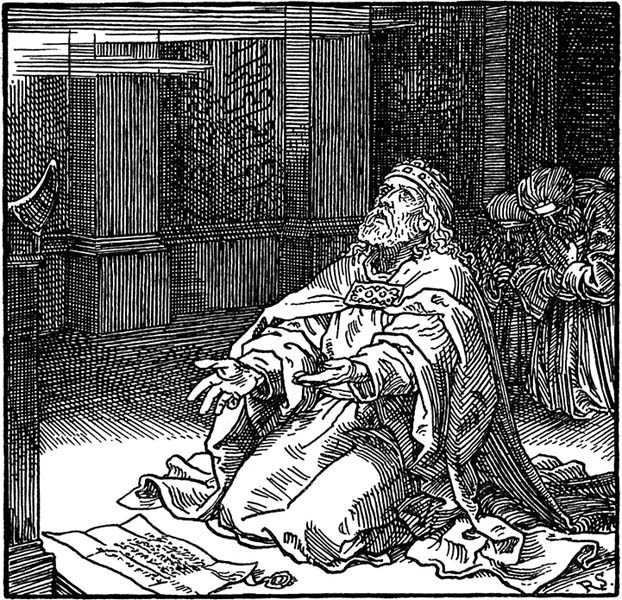
It is a common introductory problem in theology to think about the purpose of petitionary prayer. If God is all-knowing, what need is there to tell him what you want (Matt 6:8)? Furthermore, if God is perfectly good, then he is already going to do what is in your best interest without your asking. So, the problem of petitionary prayer is that if God is all-knowing and perfectly good, there is no need to ask him. Mormons have taken a different view.
Many traditional Christians have abandoned petitionary prayer as a theologically legitimate practice. Instead, the purpose of prayer is to align one’s will with God’s will (see the LDS Bible Dictionary which uses this sort of language). In such a case, the purpose of prayer is not to ask for what you want, but to discern what God wants. Prayer is a way of transforming the self, not God. Prayer is also about legitimately worshiping God, not just “thanking” him and “asking” him as the LDS prayer formula stipulates, but pondering God’s majesty. Fixed prayers in Christianity, Judaism, and Islam are theogically based in this view of God’s relationship to humanity.
Some Latter-day Saint theologians have taken to defending the legitimacy of petitionary prayer. I think that they have done this for two reasons. First, the beginnings of Mormonism are rooted in a petitionary prayer of Joseph Smith. Second, and more theologically, petitionary prayer is seen as a way of causing God to actually intervene in human affairs. Drawing on the LDS depiction of a “finite” God, prayer is seen as a legitimate conversation between God and humans wherein God can be persuaded to act. This kind of prayer is more theurgical than theolatric. The result of this view is a complete abandonment of divine providence. In this view, God can neither have a plan for the world nor is he even actively involved. For some Mormon theologians, God is neither all-knowing, nor (gasp!) perfectly good.
Ultimately, the problem of petitionary prayer is a window onto larger theological debates about the nature of God and the nature of God’s relationship to the world. On one hand, I find something attractive about both models of prayer. On the other hand, both are potentially dangerous. In the traditional model, God’s will is inscrutible and God’s providence must be held accountable for all that happens. In the LDS model, the risk is that there is simply too much freedom for both God and humans. The world seems extremely unstable. Furthermore, God seems to capriciously intervene on what basis? Why does he answer some prayers but not others? Once providence is abandoned, but divine intervention into history is still allowed, God still remains responsible for the prayers that go unanswered. In either model God seems to come off badly.
NKOTB: Handle
Alternative Lifestyles

One of the constraining aspects of Mormonism is that it seems to shut down alternative modes of living life. By “alternative lifestyles” I don’t mean to refer to experimental sexual/social relationships like hippie compounds or anything. Rather, I am interested in the way that a true Mormon cannot choose to live a nomadic or solitary life. We must exist within communities. But our communities are not just any kind of community, they are local communities.
The reason that I have been thinking about this topic lately is because I have recently been interested in sailing. I had the chance to sail competitively on a modest yacht this summer and now dreams of owning a boat have taken over my life. Fortunately my spouse has caught the bug too and we have set a goal to some day sail around the world (or at least to Europe and back). But in the back of my mind I keep worrying about my callings at church as well as the lack of contact with LDS communities for potentially months at a time.
I imagine that cattle ranchers, corporate road warriors, and people who dream to live in a cabin deep in the wilderness face the similar problem of connecting their dreams or work obligations with the constraints of LDS community life. I suspect that sun-birds share a set of these problems since they can’t hold a calling for more than 6 months. I know that I would be frustrated if I were staffing a ward full of sunbirds. Part of the problem is that one’s membership in an LDS community is necessarily local. Even if I were to go to church every week in my travels around the world, I still wouldn’t fully “belong” at any of the congregations I visited. Conceivably the internet may one day de-localize LDS community life, at least for a certain mobile portion of the membership, but I don’t suspect this will happen anytime soon. Besides, half the reason for sailing around the world is to get away from any consistent set of surroundings, including ward members.
Pious Pumpkins

This time of year always gets me thinking about how I can express what I feel about the gospel on a pumpkin. I mean, what better way to show your testimony that through the medium of a pumpkin? I can’t think of any. The pumpkin is a symbol of Christ because it grows from a tiny seed. Fortunately, someone else shares my desire to make a Christ pumpkin, and even a Gordon B. Hinkley pumpkin. Thank goodness!
Comments Contest! Real Prizes!!

Dear Readers,
We have been having a good number of visitors to our site since our humble beginnings. We are grateful that people have continued to come and hopefully enjoy our musings. However, our comment/vistor ratio seems rather small. Our view is that we haven’t yet had the critical mass of comments to really get the conversation going, even though we have plenty of people visiting! So we have devised a solution: a contest. From now until Nov 12, we will be keeping track of the most and the best comments (judged from our secret, strict formula). All are eligible, including Mark Butler, DKL, and the snarkers.
The prize will be:
1) One movie ticket gift certificate to a theater near you.
2) The highest public praise.
3) A guest blogger spot at Urban Mormonism!
As part of our drive to increase the conversations at our site, we, the Urban Bloggers also plan to have a new post every 36 hours over the next two weeks. Start your comments now!
On Being Disturbed

The Gospel of Thomas preserves a version of Jesus’s familiar saying about searching and finding, but with a twist: “Jesus said, ‘Let one who seeks not stop seeking until one finds. When one finds, one will be disturbed. When one is disturbed, one will marvel, and will reign over all.” (Logion 3). The emphasis here is that the divine mysteries, the secrets of the Kingdom, are unexpected, troubling, even disturbing. As Latter-day Saints, is the divine fundamentally disturbing?
The injunction to search and find is foundational to Mormonism. The prophet Joseph’s reading of James 1:5 is essentially a version of this common theme. Joseph’s great visions were certainly “disturbing” both to him and to the world. This is often set into contrast with the radical teachings and practices of the early LDS church. Mormons today seem to see the divine as essentially benign, benevolent, and which confirms our basic values. The radical is something which is unthinkable, but in both early Christianity and early Mormonism, the radical was precisely what defined God.
Is there still room for being disturbed? Where the spiritual tradition of being distrubed remains a powerful force is actually in the study of LDS history or the study of Christian history in general. LDS seekers often find what is distrubing, though it is not God, but the church which disturbs. Can we revive this practice of being disturbed as a central aspect of spiritual practice? Can the process of doubt and disturbance not be seen as antitheses to faithful existence, but its very foundation?
Mormonism is a Humanism

Readers may recognize that this title riffs off of Jean-Paul Sartre’s influential essay “Existentialism is a Humanism.” Though the German existentialists might have rejected this association, Sartre’s desire to locate Existentialism within the humanist tradition shows the powerful impact that humanism has in the imagination of the West. It’s influence is so profound that for Sartre, humanism is the genus and existentialism is a species. Can the same be said about Mormonism? Is Mormonism simply an expression of the backbone of the Modern West’s philosophical framework?
What got me thinking about this topic was a recent performance I attended by Julia Sweeney called “Letting Go of God.” Julia was the SNL comedian that is famous for playing the lovable androgynous “Pat.” In it she recounts her failed search for religion and belief in God. (As a side note, there was a long discussion of her encounter with the Mormon missionaries and her reactions to the first discussion. But I’ll save this for another post). Now she considers herself a secular humanist and has even been given awards by humanist societies.
Humanism really traces its roots to modernity and the turn to ethics of and concerning the individual subject. The concept of rights, democracy, the intrinsic worth of humans, and universal rationality are all the products of humanism. Humanism is the philosophical framework behind feminism, civil rights, the end of torture, invasion into Iraq, public schools, and universal health care. There is no one humanist ideology since humanists claim all sorts of competing positions within the same issue. For example, pro-choice and pro-life movements might be suprised to learn that they are both rooted in humanism, though they are configuring its constitutive elements differently.
Mormonism seems to sit squarely in the humanist tradition with its emphasis on the sacred character of each individual, its positive view of the nature of human beings (the rejection of Original Sin was a halmark of modern humanism), and its focus on human progress. Indeed, the Mormon doctrine of God can in some ways be seen as the theological zenith of humanism.
Secular humanists (and religious one’s as well) locate the basis of ethical behavior outside of revealed religion. “Thou shalt not kill” doesn’t really take a revelation to figure out. In fact, one of the most important developments in modernity (esp. Hume and Kant) was to separate ethics from theology. Even most Mormons accept that being a good person can be determined without reference to theological criteria.
All of this is a round about way of asking what Mormonism’s value add is to humanism, even in its secular form. Do we learn anything more about ethics that cannot already be argued from within the humanist tradition? Or, is Mormonism just another expression of the ways in which humanism has already framed our view of the individual subject? If not, then why be a Mormon and not just a humanist?